

The process of making pasta is surprisingly easy. Although it is a little more involved than “set-it and forget it” no-knead bread, there is still something incredibly relaxing about working with dough.

It’s the sort of thing I enjoy doing on a sunday afternoon after setting my laundry on the line. Something that brings to mind casual meals with friends in the backyard, or a romantic dinner for two. And while I generally consider pasta to be a heavier cold weather dish, this is a recipe I especially enjoy making in the summer when I can use fresh herbs in the sauce and serve it with a side of cedar plank salmon grilled on the BBQ!
It is a fun process that can include the whole family.

This recipe calls for all purpose flour, eggs and olive oil.
I am using a manual, crank pasta machine along with the cutter attachment, as well as a wooden drying rack. It is not necessary to have those tool but you will need: a rolling pin, a fork, a bench scraper, pizza wheel or sharp knife and a clean countertop. You will also need one or 2 large baking sheet or a large cutting board sprinkled with flour as a drying surface.
Easy Homemade Pasta Recipe to Try This Summer
There’s something deeply satisfying about transforming a handful of simple ingredients into silky, tender strands of pasta. The dough comes together with ease, turning soft and elastic under your hands, and rewards a little patience with a beautiful, rustic texture you simply can’t replicate from a box. Whether rolled thin for delicate noodles or cut a little thicker for a heartier bite, homemade pasta has a way of elevating even the simplest of meals. It’s a process that feels both grounding and indulgent—one that invites you to slow down, get your hands a little flour-dusted, and enjoy the rhythm of creating something from scratch.

Ingredients:
Instructions
-
Pour the 2 cups of flour on a clean countertop into a small mound and using a spoon or mesuring cup, create a crater for the wet ingredients. Crack your eggs into the hole, then add your oil and your salt. Using your fork, start breaking up your eggs and gently mixing in your wet ingredients.
-
Next, using your hands or your counter scraper, start moving flour inward into the center, mixing wet and dry ingredients into a shaggy ball.
-
Once your shaggy dough is formed, you will knead the dough for 8 - 10 minutes until smooth. The dough can be pretty stiff, especially at first. If you've ever done bread, it is not that same but trust the process! As with all doughs, if it is too dry, add a touch of water, if it is too tacky, add a touch of flour. Once it has achieved the desired texture, wrap in plastic and rest on the counter for 30 minutes.
-
After resting, you will prepare your drying surface by sprinkling your baking sheets or cutting board with flour. Take your dough out of the plastic onto a well floured surface and cut it in 4.

-
Taking each piece at a time, gently flatten it with your fingers into a disk. If you are running it through a pasta machine attachment, you will start with the lowest setting and slowly work your way up. You may need to roll the dough several times through the same setting. Rolling your dough too quickly can cause tears.
If you are not using a machine, simply roll our your dough into a long rectangle using your rolling pin, keeping even pressure. If your ribbons are getting too long, simply cut it halfway and continue rolling.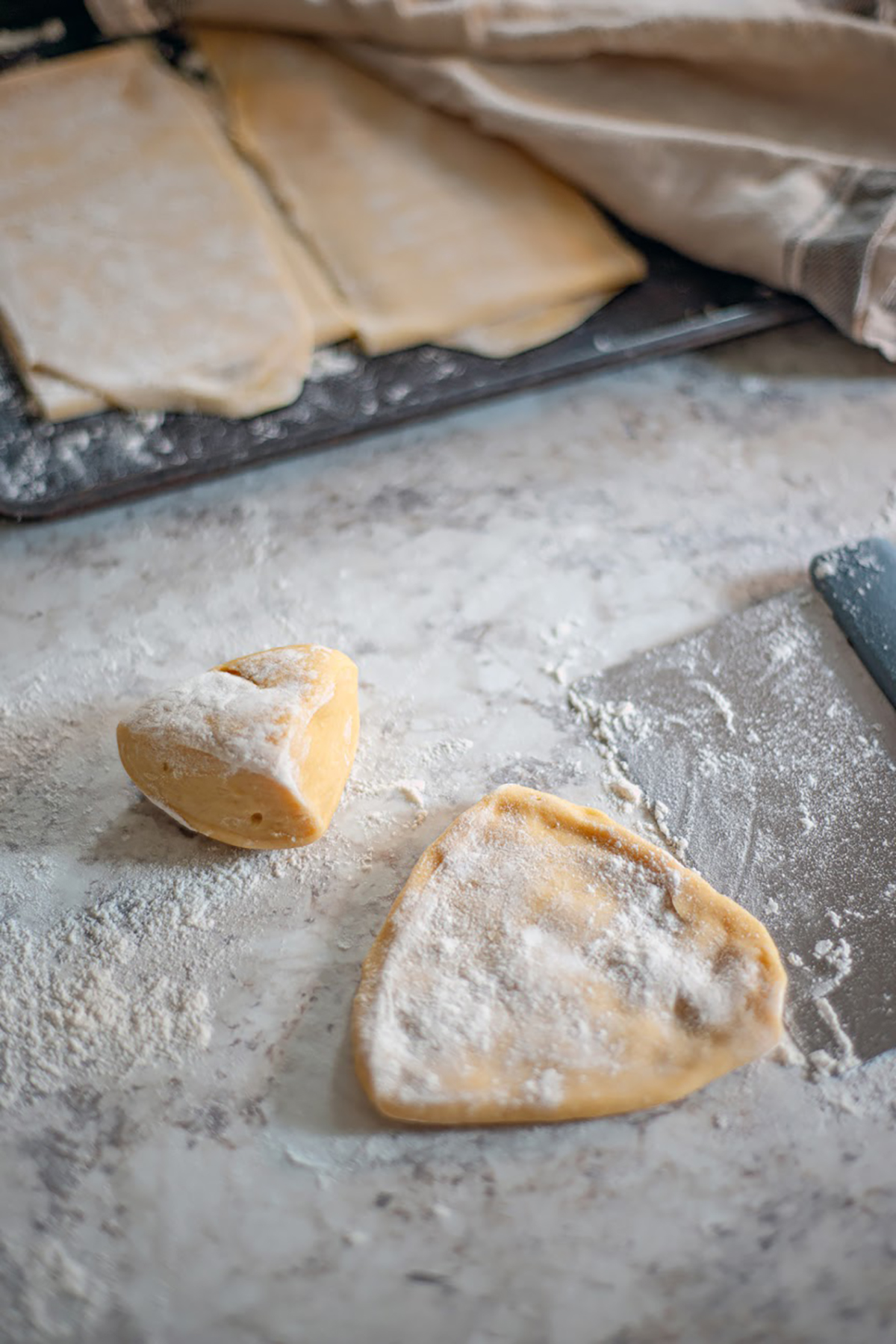
-
When you have achieved the desirec thickness, fold your dough ribbons in half, making sure to sprinkle both sides with flour. You can set them aside on the baking sheet. You should always apply flour between layers to prevent your dough from sticking to itself.

-
If you are using the pasta cutter attachment:
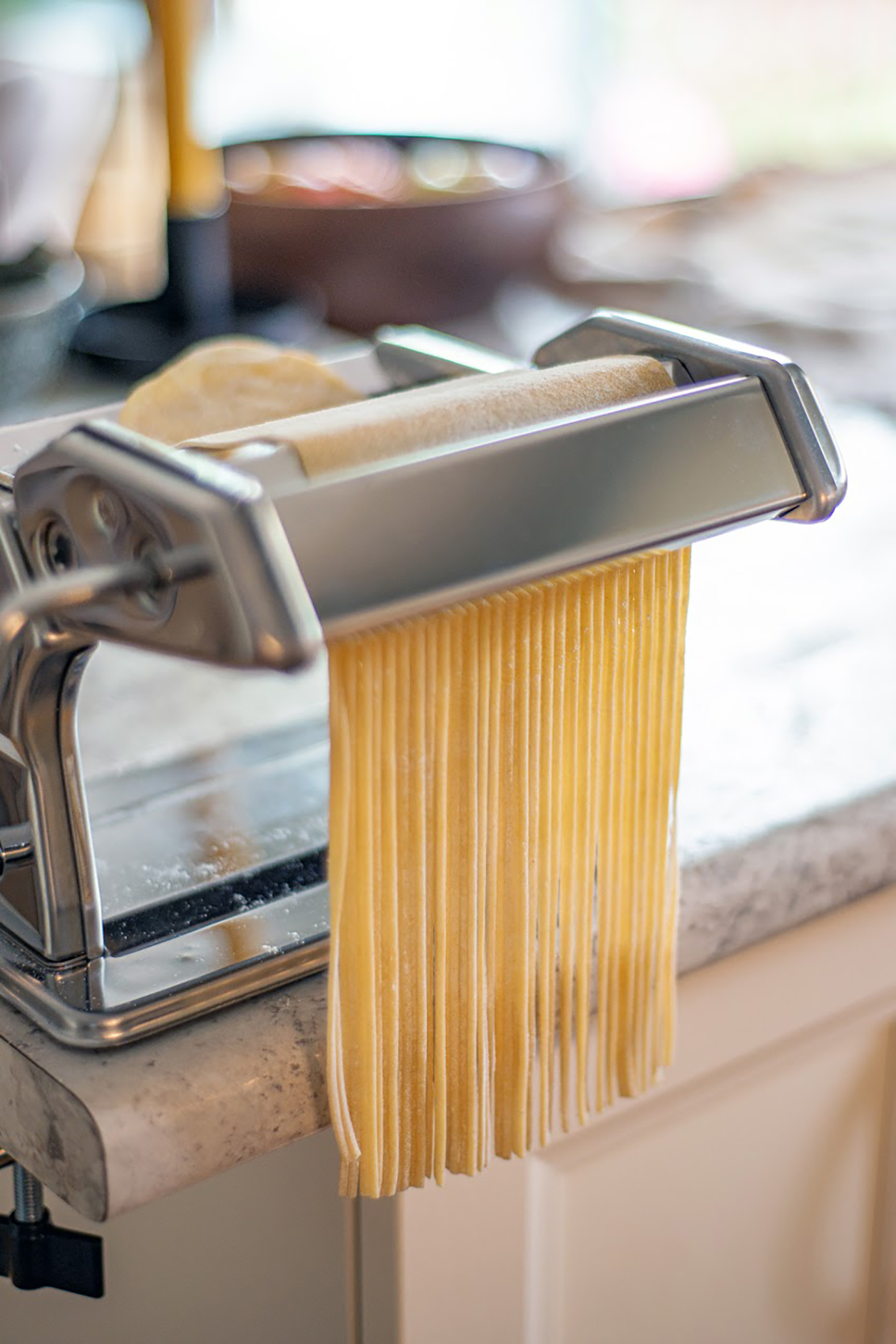
Taking one rectangle at a time, run it through your pasta cutter. Hang your pasta on a drying wrack, or take sections and roll them together into a nest and place on your baking sheet to dry.
-
If you are not using a pasta cutter attachment:
If you want to roll linguine by hand, keep your rectangles wider. Rather than folding your dough, generously sprinkle with flour to prevent sticking, and roll it into a tube. Slice the tube into 1/2 cm ribbons, then gently shake out the strands by hand before rolling them into a nest for drying.
-
Leave the pasta to dry on the counter, on the rack or on the baking sheet, for a few hours if you plan on making it same day. Cook once it has stifferened.
You can also refridgerate it. After a few hours, transfer to a ziplock bag and keep in the fridge. Use within 3 days.
Freezing: Place the baking sheets with the pasta in the freezer for 30 minutes or so, then transfer to freezer bags. The pasta will keep frozen for 3 months.
Drying completely: You can leave the pasta to dry for a full 24 hours on the counter (Covered with a dishcloth) Once it is fully dry, you can store it in a sealed container at room temperature for up to a month.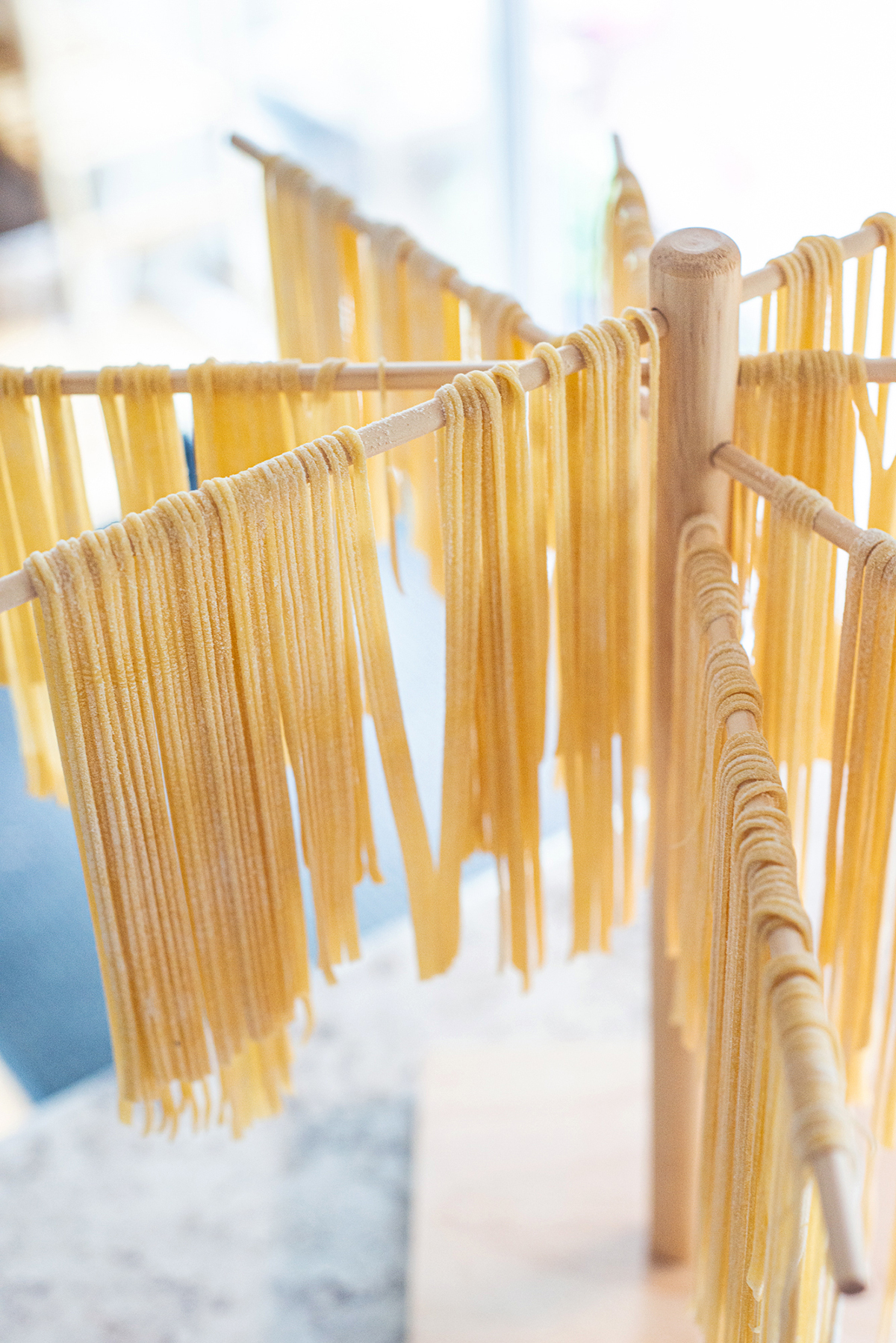 If drying for storage, make sure that your pasta is dried completely as it might spoil otherwise.
-
Fresh pasta should take 3 - 4 minutes to cook, depending on the thickness. Keeping the sauce light really allows the pasta to shine.


